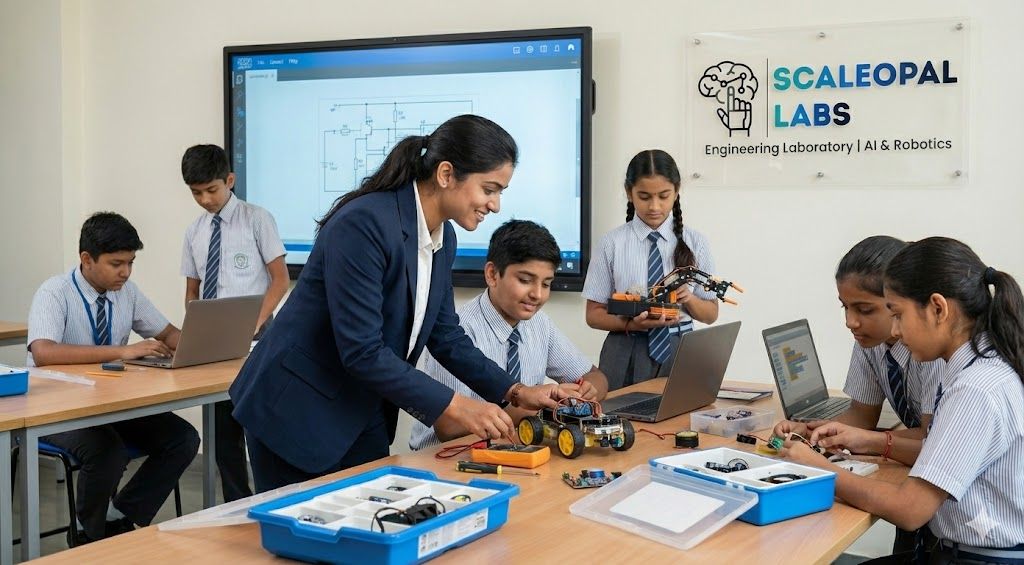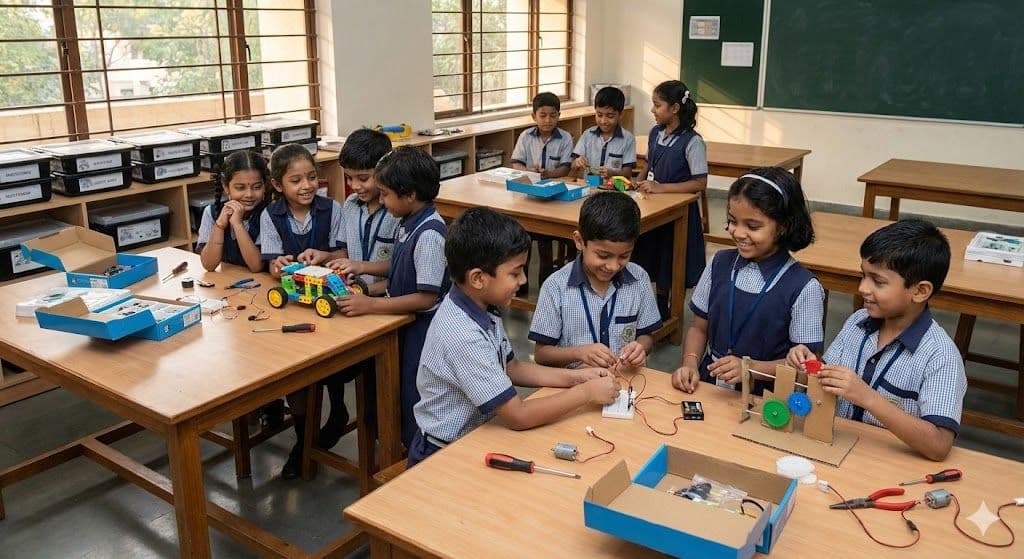
Remember the Classroom That Didn't Quite Arrive?
"We all had that one moment. Staring at a circuit diagram, or watching something mechanical move, when something clicked, and we thought: I want to understand how that works. That feeling never really goes away. It just needs the right place to grow."
The idea behind Scaleopal Labs.
Do you remember that feeling? Flipping to the electronics chapter in your science textbook, the one with the circuit diagrams, and feeling this quiet buzz of excitement. Like something in you already knew this was important, even before you could explain why.
Schools across India gave a whole generation that spark. Teachers stayed late. Labs were set up with whatever was available. Science fairs were organised with genuine pride. That effort shaped millions of curious minds, and it still does.
Technology has a habit of moving faster than anyone plans for. The tools the world now runs on — things like AI, robotics, IoT, and autonomous systems — arrived quicker than any curriculum could fully anticipate. That's not anyone's shortcoming. It's just the nature of a world that changes faster every decade.
And here's the exciting part. Right now, schools have a real opportunity to not just keep up but to lead. To be the place where students don't just read about the future but actually start building it.
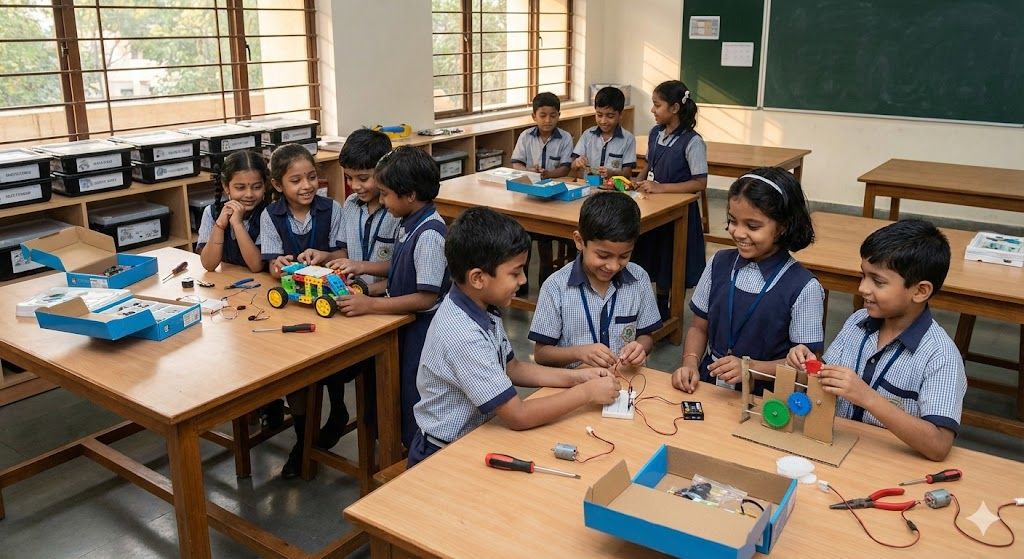
What Would Have Changed If You Had a Real Lab?
Close your eyes for a second and go back. You're twelve. Someone hands you a small robotic arm and a microcontroller and sits beside you — not to lecture, but to say: "Okay, let's figure this out together." What happens next?
Maybe you discover that engineering isn't this abstract, distant thing. It's physical and logical and deeply satisfying. You write a line of code. The arm moves. And something shifts in you permanently. You think: I did that.
Or maybe you discover something else entirely. What excites you isn't the code but the design. The way systems connect. The architecture of how things talk to each other. Either way, you walk out of that session knowing something true about yourself that no exam could have measured.
"Hands-on learning doesn't just teach skills. It reveals identity. A child who builds something understands themselves differently, and that confidence becomes the foundation of everything they do next."
It's not just intuition. Research backs this up completely. Students who work on real, hands-on projects retain knowledge longer, think more critically, and step into careers with far more confidence than those who learned the same concepts only on paper. The World Economic Forum puts it plainly: 65% of today's primary school students will work in jobs that simply don't exist yet.
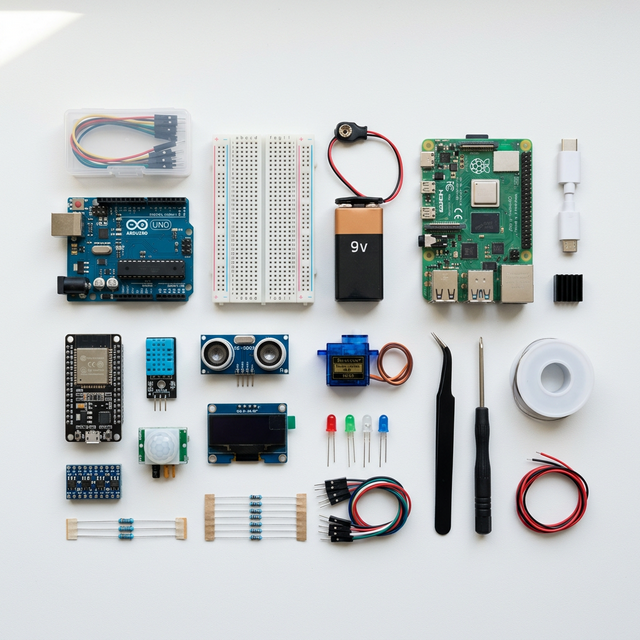
- Stronger Critical Thinking: Students who build real systems learn to debug, iterate, and reason under uncertainty.
- Earlier Career Clarity: Hands-on projects help students identify their true strengths — whether that's writing code, designing hardware, or systems architecture.
- Collaborative Engineering: Lab-based teams mirror real industry environments and build communication skills.
- Industry-Ready Confidence: Students graduate with actual projects, not just papers.
The Moment India's Education Policy Is Pointing Towards
Here's what's genuinely exciting about this moment. The world isn't waiting anymore, and neither is India's education policy.
CISCE introduced Robotics and AI as a formal subject from the 2023-24 academic year. CBSE created dedicated AI subject codes. NEP 2020 set a clear direction to move away from rote learning and toward doing, building, and problem-solving.
What's changed is that it's no longer complicated or expensive to get there. The right curriculum, the right hardware, and the right mentors can now come to your campus without the financial overhead that used to make this feel out of reach.
- 65% of today's students will work in jobs that don't yet exist (WEF).
- NEP 2020 mandates experiential, project-based learning from Grade 6.
- ₹0 setup cost for a Scaleopal AI and Robotics Lab at your institution.
Introducing Scaleopal Labs — Built by Engineers for Students
We started Scaleopal Labs because we kept asking ourselves a simple question. What if the schools that want to do this had a partner who made it genuinely easy?
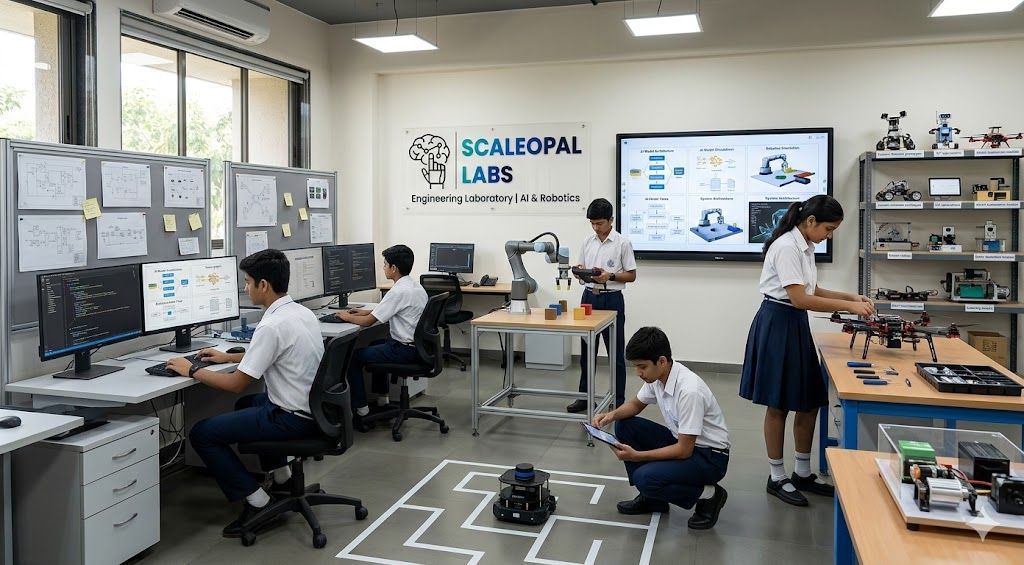
We're engineers. We build AI systems and robotics products professionally. And we wanted to bring that living knowledge into schools as a structured part of education.
So we built a 10-year curriculum around 7 pillars, starting from the basics in Class 1 and growing to real AI deployments and entrepreneurial thinking by Class 10. Every step is guided by active engineers. When a student finishes a capstone project, they receive a verifiable Credential of Internship — real proof that they built something meaningful.
- Phase 01: Artificial Intelligence. From algorithms to Agentic AI deployment.
- Phase 02: Advanced Robotics. Industrial automation principles and hands-on assembly.
- Phase 03: IoT and Electronics. Smart device design, circuit programming, cloud integration.
- Phase 04: Drone Technology. Aerodynamics, stabilisation, and autonomous navigation.
- Phase 05: EV Technology. Energy systems and clean transportation engineering.
- Phase 06: Immersive Tech (AR/VR). 3D environments and interactive digital experiences.
- Phase 07: Tech Entrepreneurship. Product thinking, pitching, and launch fundamentals.
Zero Investment. A Brand New Revenue Stream.
We know what the first question usually is: This sounds great, but what does it cost us?
The answer is simple. Nothing to set up. We bring the hardware, curriculum, faculty training, and everything needed to run a world-class AI and Robotics lab on your campus. Your institution carries no setup burden and gains a new revenue stream that grows with your student community.
- Enterprise compute, hardware, and autonomous systems kits — fully sponsored.
- Continuous Faculty Development Programs by active engineers — included at no cost.
- A new revenue stream for your institution, seamlessly integrated and sustainably structured.
- 100% NEP 2020 compliant with audit-ready documentation provided.
Let's Give This Generation Something Extraordinary
Think about the students in your school right now. The quiet one in the back row who lights up whenever technology comes up. The group that stays back to tinker. The student already posting gadget explainer videos.
They're ready. They just need the space, the tools, and a mentor who can say: Come on, let's build something.
Imagine a student going home and saying they built a robot today, and it moved because they programmed it. That moment can happen in your school this academic year.
"The best time to set up an AI and Robotics Lab was five years ago. The second-best time is this academic year."
Parents are already asking what schools are doing to prepare students for the world of AI. The schools with real labs and real student projects will be the ones families choose.