Our Curriculum

Future-Ready Minds Start Here.

A full-spectrum K-10 technology syllabus covering AI, robotics, IoT, drones, EV systems, immersive tech, and entrepreneurship.

At Scaleopal Labs, we believe in being a friendly scaling partner - a true Pal to schools, teachers, and parents. We do not just teach students how to write code; we teach them to engineer, prototype, and launch real-world solutions. Our comprehensive 10-year progressive syllabus is aligned with NEP 2020 and emphasizes experiential learning, computational thinking, leadership, and future-ready skills.

Syllabus Architecture

What Students Learn, Build, and Ship

Seven connected tracks, one integrated outcome model. Students move from foundations to production thinking by building real systems, documenting choices, and presenting functional outcomes.

Program Model

Concept -> Lab -> Capstone -> Presentation

Tracks

7

Lab Orientation

Build-First Curriculum

Evidence

Portfolio + Demonstrations

Assessment

Rubric + System Testing

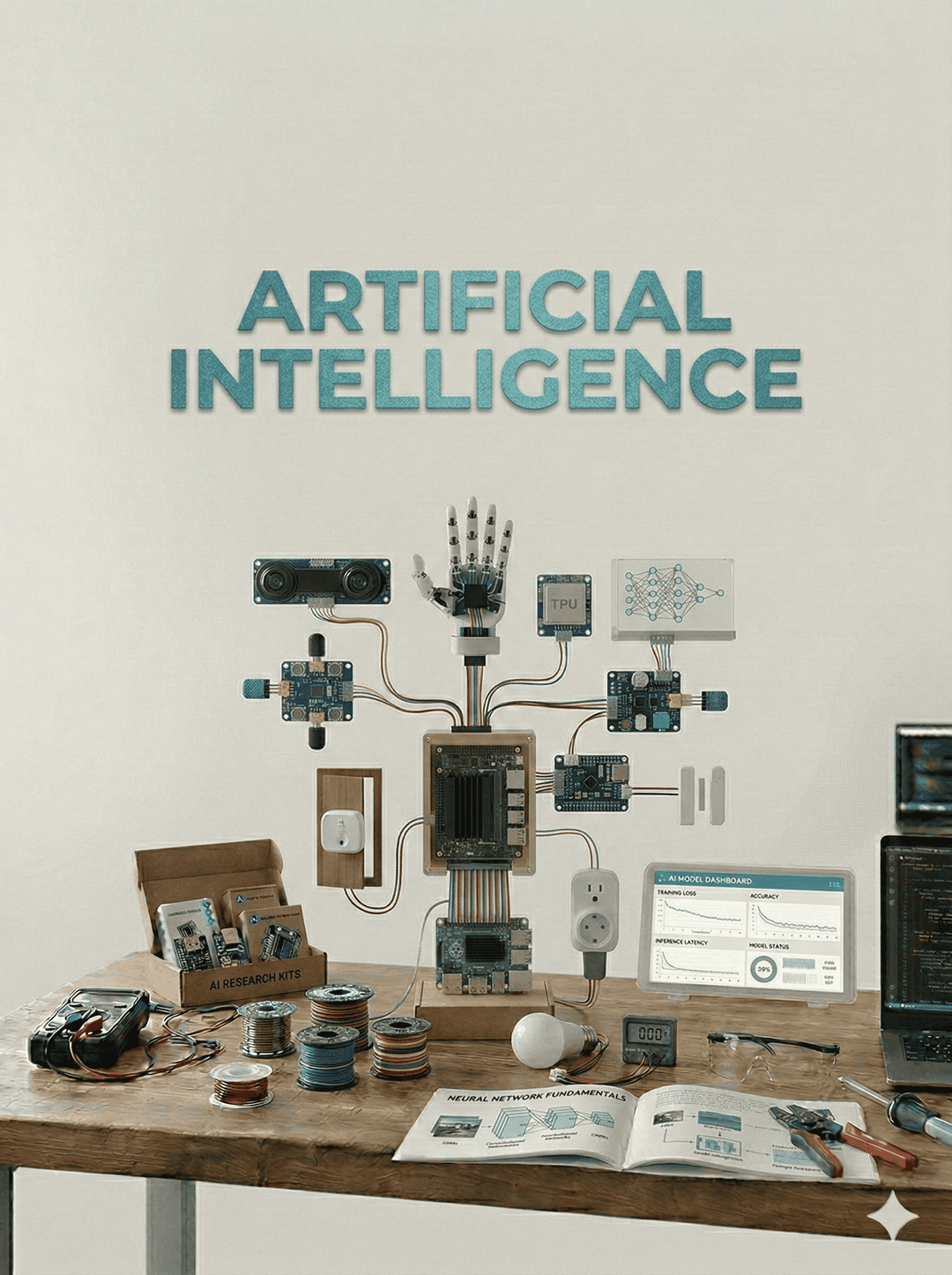
Artificial Intelligence (AI)

Students move from understanding basic algorithms to commanding advanced AI systems, learning how to build, optimize, and deploy intelligent software.

Core Topics

  • Generative AI
  • Agentic AI swarms
  • Prompt Engineering
  • Retrieval-Augmented Generation (RAG)

Learning Outcomes

  • Build AI assistants that answer domain-specific school or community problems.
  • Design safe prompt workflows with clear input-output validation.
  • Implement retrieval pipelines that combine facts, context, and reasoning.

Capstone & Evaluation

Capstone Build

A classroom AI copilot that uses curated data and cites evidence.

Assessment

Model behavior tests, prompt quality rubrics, and deployment readiness reviews.

Advanced Robotics

Students bring code into the physical world by designing, assembling, and programming functional robots.

Core Topics

  • Structural engineering
  • Autonomous navigation
  • Kinematics
  • Motor control

Learning Outcomes

  • Assemble robust robotic frames with stable center-of-gravity design.
  • Program motion logic for line following, obstacle avoidance, and path routines.
  • Calibrate motors and gear ratios for predictable movement.

Capstone & Evaluation

Capstone Build

An autonomous challenge robot that completes a multi-stage arena mission.

Assessment

Mechanical reliability checks, control-loop tuning scores, and performance trials.

The Internet of Things (IoT) & Electronics

Students connect the physical and digital realms by mastering hardware engineering and building smart connected devices.

Core Topics

  • Circuit design
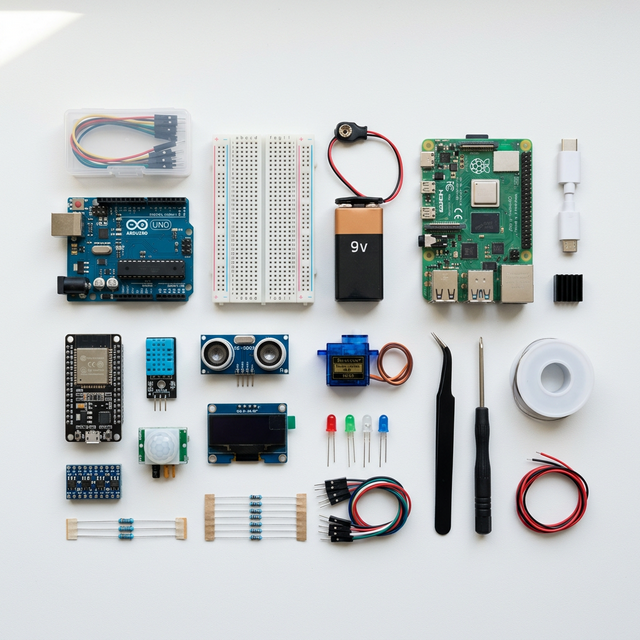
  • Microcontrollers (Arduino, ESP32, Raspberry Pi)
  • Sensor integration
  • Smart home automation

Learning Outcomes

  • Design sensor-driven systems that collect and transmit real-world data.
  • Build cloud-connected dashboards for monitoring and control.
  • Integrate multi-sensor logic for practical automation scenarios.

Capstone & Evaluation

Capstone Build

A smart campus monitoring node with live dashboard and alert automation.

Assessment

Circuit stability tests, telemetry accuracy, and system uptime tracking.

Drone Technology

Students explore aviation and spatial programming through hands-on drone assembly and flight logic.

Core Topics

  • Aerodynamics
  • Flight controllers
  • Motor calibration
  • Automated aerial pathways

Learning Outcomes

  • Understand thrust, drag, stability, and flight envelope fundamentals.
  • Tune ESC/motor combinations for smooth and safe flight behavior.
  • Program waypoint and mission-based autonomous routes.

Capstone & Evaluation

Capstone Build

A programmable mission drone performing mapped waypoint navigation.

Assessment

Flight safety checklists, route precision scoring, and mission completion metrics.

Electric Vehicle (EV) Technology

Students prepare for sustainable transportation by understanding the mechanics and architecture of clean mobility.

Core Topics

  • Battery management systems
  • Electric drivetrains
  • Power distribution
  • Motor efficiency

Learning Outcomes

  • Analyze EV power flow from battery to drivetrain under different loads.
  • Model charging, thermal behavior, and efficiency tradeoffs.
  • Design compact drivetrain concepts for educational prototypes.

Capstone & Evaluation

Capstone Build

A mini EV platform with monitored battery, drivetrain, and performance dashboard.

Assessment

Energy-efficiency benchmarks, BMS logic validation, and drivetrain diagnostics.

Immersive Technology (AR & VR)

Students build alternate realities by designing interactive 3D environments that blend digital overlays with the real world.

Core Topics

  • Augmented Reality (AR)
  • Virtual Reality (VR)
  • Spatial computing
  • Interactive 3D simulations

Learning Outcomes

  • Create immersive scenes with interaction design and motion logic.
  • Build AR overlays for educational storytelling and visualization.
  • Optimize 3D assets and interactions for smooth real-time performance.

Capstone & Evaluation

Capstone Build

An immersive STEM simulation module for classroom learning experiences.

Assessment

Interaction usability tests, frame-rate targets, and user-experience rubrics.

Entrepreneurship & Leadership

Students graduate as confident builders and founders by learning how to launch products, lead teams, and communicate ideas effectively.

Core Topics

  • Business development
  • Product strategy
  • Pitching and communication
  • Team collaboration

Learning Outcomes

  • Translate technical projects into market-ready problem-solution narratives.
  • Define MVP scope, user value, pricing basics, and launch plans.
  • Lead team execution using sprint planning and role accountability.

Capstone & Evaluation

Capstone Build

A startup-ready pitch with prototype demo, roadmap, and go-to-market approach.

Assessment

Pitch-panel evaluation, team execution reports, and product strategy defense.

Progressive Path

The Learning Journey

Grade-by-Grade Breakdown

Phase 1Grades 1 to 3

The Discovery Phase

The Discovery Phase

Building intuition through play, physical mechanics, and creative problem-solving.

Focus Areas

The magic of electricity, safety protocols, logical sequences, and understanding what makes a machine "smart."

Key Milestones

Understanding the difference between human intuition and robotic programming.

Mega Projects

The Human Hardware Relay, Balloon-Powered Rovers, and the Solar-Bug Tracker.

Tech Stack

Scratch3D PensCopper tape circuitsDC motorsGenerative AI art tools (Canva, AutoDraw)
Phase 2Grades 4 to 7

Smart Systems & Software Architects

Smart Systems & Software Architects

Transitioning from visual blocks to text-based coding and virtual simulations.

Focus Areas

Introduction to the "Brain" (Microcontrollers), hardware-software integration, basic Python, and C++ (Arduino).

Key Milestones

Moving from physical prototypes to simulated circuits to save hardware costs, and writing first Python scripts. Introduction to the concept of an MVP (Minimum Viable Product).

Mega Projects

The Smart Nightlight, Digital Weather Station, Password-Protected Safe, and Automated Plant Watering systems.

Tech Stack

Tinkercad & Wokwi (Virtual Simulation)Arduino UnoESP boardsIR/Ultrasonic sensorsMakeCode
Phase 3Grades 8 to 10

The AI Frontier & Future Founders

The AI Frontier & Future Founders

Mastering edge computing, deep tech, and startup execution.

Focus Areas

Advanced IoT networking, Computer Vision, drone telemetry, and the architecture of Agentic AI.

Key Milestones

Building systems that make autonomous decisions (AI sentries, drones). Structuring a real technology startup, understanding competitor analysis, and creating marketing plans.

Mega Projects

Sun-Tracking Solar Panels, Autonomous Smart City Hub, Face Tracking Turrets, and Custom FPV Drone Builds.

Tech Stack

Raspberry PiPython (OpenCV, GPIO)ESP32 Cloud IntegrationUnity 3DAgentic Frameworks
Value Proposition

Why Partner With Scaleopal Labs?

The program is designed as an implementation-ready model for schools: manageable operations, measurable outcomes, and visible student growth.

Modern hardware components

For Principals & School Management

  • 01

    NEP 2020 Compliance

    Seamlessly integrate vocational training, digital literacy, and AI into your school's daily timetable.

  • 02

    Cost-Effective Infrastructure

    Virtual simulators like Tinkercad and Wokwi reduce hardware burnouts during early learning and lower lab costs.

  • 03

    Prestige & Portfolio

    Annual tech showcases where students present market-ready prototypes strengthen institutional reputation.

For Educators & Teachers

  • 01

    Plug-and-Play Lesson Plans

    Structured teaching guides, lab activities, and project frameworks make delivery practical for non-specialist educators.

  • 02

    Engagement First

    Theory is paired with chapter-level build challenges and end-of-module mega projects for stronger classroom participation.

For Parents

  • 01

    Beyond Passive Screen Time

    Students move from consuming content to creating meaningful systems and prototypes.

  • 02

    Career-Ready Portfolios

    By Grade 10, learners build documented portfolios with working products and pitch-ready narratives.

FAQs

Curriculum FAQs

Common curriculum planning questions from school leadership and academic teams.

How is the AI and robotics curriculum structured from Class 1 to 10?

The structure is progressive year by year, starting with core logic and computational thinking and moving toward applied AI systems and capstone projects.

Is the curriculum different for junior and senior grades?

Yes. Junior grades focus on fundamentals and exploration, while senior grades move into Python, AI, IoT systems, and real-world project delivery.

How is student progress assessed in project-based learning?

Assessment is based on build quality, understanding, collaboration, and project outcomes rather than only theory-based written evaluation.

Does the curriculum support CBSE and ICSE school requirements?

Yes. The framework is designed to align with mainstream school board expectations while expanding practical, future-ready technology exposure.

Are lesson plans and classroom resources provided to schools?

Yes. Schools receive structured session plans, implementation support materials, and guided delivery frameworks for classroom execution.

What outcomes should schools expect after one academic year?

Schools usually see stronger student engagement, tangible project portfolios, better parent perception, and measurable faculty upskilling.
Bring the Future to Your Classroom Today.

Whether you are a school leader looking to upgrade your computer labs, or a parent wanting the best for your child, let's build something incredible together.